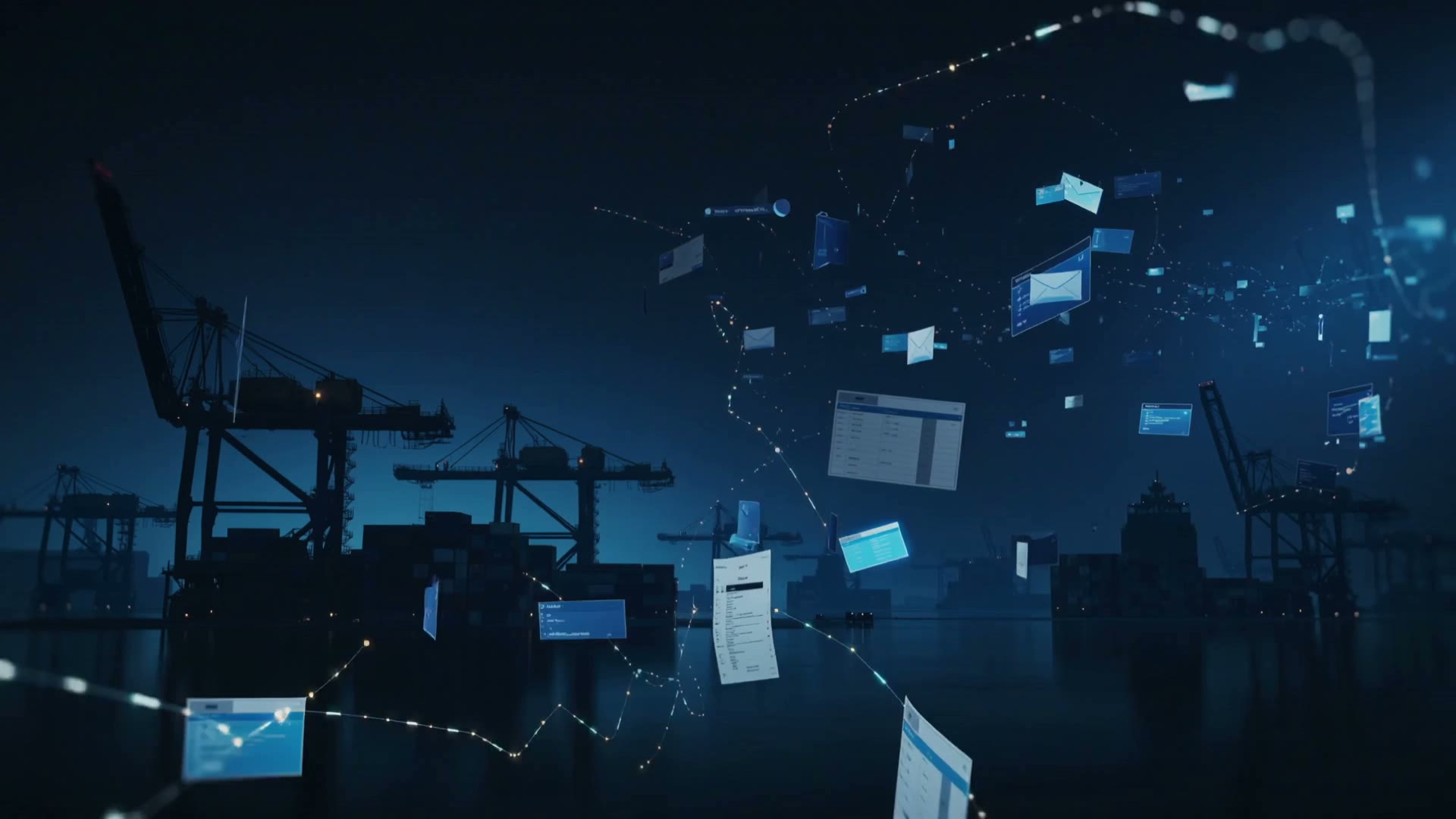

The freight forwarding industry still runs on emails, Excel files, shared folders, WhatsApp messages, and tribal operational knowledge.
Despite massive technological progress in other industries, many freight forwarders in 2026 still manage buying rates, customer quotations, invoicing validation, and supplier cost control manually.
The result is operational chaos, slow quotation cycles, unreliable data, margin leakage, and massive dependency on specific employees.
This is not because freight forwarders are resistant to technology.
It is because freight pricing and logistics operations are far more complex than most software companies understand.
After years of building Freightools AI together with real freight forwarders, one thing became clear:
The problem is not simply "digitization."
The problem is that most freight software was never designed for the operational reality of freight forwarding.
The Most Manual Process Still Existing in Freight Forwarding
One of the most manual processes inside freight forwarding companies today is still the management of buying and selling rates.
A typical workflow still looks like this:
- Suppliers send tariffs by email
- Sales teams manually quote customers
- Operational teams manually issue invoices
- Finance teams manually verify supplier invoices
- Employees manually investigate profitability discrepancies
This process often involves:
- PDFs
- Excel files
- Pivot tables
- Email attachments
- Shared folders
- WhatsApp messages
- Carrier websites
- Spot-rate portals
Even in large freight companies, much of this process is still heavily dependent on human memory and manual searching.
Why Freight Pricing Is So Difficult to Standardize
Freight pricing is not static.
Prices can change weekly, daily, or even multiple times per day.
Freight forwarders deal with:
- Spot rates
- Peak season surcharges
- Fuel adjustments
- BAF
- War risk surcharges
- Blank sailings
- Space availability issues
- Currency fluctuations
- Port congestion
- Trucking availability
- Overweight charges
- VGM-related costs
- Country-specific regulations
At the same time, every supplier structures rates differently.
One supplier sends Excel files. Another sends PDFs. Another sends prices inside the email body itself.
Even the Excel structures are inconsistent:
- Pivot layouts
- Different surcharge logic
- Different commodity structures
- Different geographic breakdowns
- Different validity formats
There is no universal freight pricing standard.
There is no universal API.
Every carrier, NVOCC, agent, and freight forwarder structures pricing differently.
This is one of the biggest hidden operational problems in logistics.
The Real Operational Problem Nobody Talks About
The biggest operational issue is not receiving the rates.
The biggest issue is what happens after receiving them.
Most freight companies:
- Use the rate once
- Send the quotation to the customer
- Save the file in a shared folder
- Lose operational visibility afterward
This creates a massive knowledge fragmentation problem.
Another salesperson inside the same company may have no idea that:
- A valid buying agreement already exists
- Better pricing is available
- A negotiated carrier deal was already secured
As a result:
- Teams waste time searching
- Margins become inconsistent
- Quotations become slower
- Companies lose business opportunities
The knowledge exists — but it is trapped inside emails and folders instead of becoming structured operational intelligence.
Why Manual Freight Digitization Usually Fails
For years, freight companies tried solving this problem manually.
The traditional approach was:
- Hire employees
- Extract supplier tariffs manually
- Enter everything into Excel sheets or databases
- Build searchable internal pricing systems
The issue was reliability.
When tariff ingestion depends on manual typing:
- Data becomes outdated
- Mistakes happen
- Employees get overloaded
- Sick days create operational gaps
- Teams stop trusting the system
Once employees stop trusting the pricing data, they return to manual work immediately.
That is why many freight digitization projects partially fail.
The problem is not only technology.
The problem is operational trust.
What Happens When Freight Rates Become Structured Data
Once buying and selling rates become structured and searchable, freight operations change completely.
The company gains:
- Centralized pricing visibility
- Faster quotation speed
- Better margin control
- Easier invoice validation
- Better supplier negotiations
- Operational consistency
- AI automation capabilities
Sales teams can:
- Quote faster
- Compare suppliers instantly
- Combine pricing structures intelligently
- Respond before competitors
Finance teams can:
- Validate supplier invoices faster
- Detect pricing discrepancies
- Reduce operational investigation time
Management gains:
- Visibility into margins
- Visibility into pricing trends
- Better operational analytics
At that point, AI automation becomes possible.
Structured freight data enables:
- Automated quotation generation
- AI-assisted email replies
- Customer self-service portals
- Automated invoice validation
- Intelligent pricing recommendations
- AI-powered search across all agreements
This is the transition from "digital storage" to AI-native freight operations.
The Biggest Mistake Freight Software Companies Make
Many software companies entering logistics believe they can force freight forwarders into a standardized workflow.
That usually fails.
Every freight forwarder operates differently:
- Different operational flows
- Different quoting structures
- Different invoicing logic
- Different profitability rules
- Different shipment handling methods
Freight forwarding software cannot be built correctly without deep operational freight knowledge.
Real freight digitization requires:
- Operational flexibility
- Configurability
- Real-world freight experience
- Understanding of edge cases
- Understanding of carrier behavior
- Understanding of actual forwarding workflows
Technology alone is not enough.
What AI-Native Freight Forwarding Actually Means
AI-native freight forwarding does not mean replacing freight forwarders.
It means embedding small, intelligent AI-assisted processes directly into operational workflows.
That includes:
- AI-assisted tariff ingestion
- AI-assisted quotation generation
- Automated pricing searches
- Automated invoice registration
- AI-powered email understanding
- Operational automation around structured freight data
The future of freight forwarding is not fully autonomous logistics.
The future is operational augmentation: human freight expertise combined with structured data and AI-assisted workflows.
And the companies that structure their operational knowledge first will have a massive competitive advantage over those still operating through emails and folders alone.